LEARNING EXPERIENCE LINK CLICK HERE
I. Setting the Stage
A. Standards & Indicators
National Health Education Standards & Performance Indicators
Standard 1: Students will comprehend concepts related to health promotion and disease prevention to enhance health.
- 1.5.1 Describe the relationship between healthy behaviors and personal health.
- 5.4 Describe ways to prevent common childhood injuries and health problems.
- 5.5 Describe when it is important to seek health care.
Standard 6: Students will demonstrate the ability to use goal-setting skills to enhance health.
- 5.1 Set a personal health goal and track progress toward its achievement.
- 5.2 Identify resources to assist in achieving a personal health goal.
Standard 7: Students will demonstrate the ability to practice health-enhancing behaviors and avoid or reduce health risks.
- 7.5.1 Identify responsible personal health behaviors.
- 7.5.2 Demonstrate a variety of healthy practices and behaviors to maintain or improve personal health
New York State Health Education Standards
1: Personal Health and Fitness
Students will have the necessary knowledge and skills to establish and maintain physical fitness, participate in physical activity, and maintain personal health.
Students will understand human growth and development and recognize the relationship between behaviors and healthy development. They will understand ways to promote health and prevent disease and will demonstrate and practice positive health behaviors.
- Explain how eating nutritionally balanced meals and snacks
promotes health - Describe the physical, social and emotional indicators of healthy
People - Identify responsible health behaviors and demonstrate
strategies to improve or maintain personal health - Identify common health problems and indicate how they can be
prevented, detected and treated - Set a personal health goal and track progress toward its achievement.
3: Resource Management
Students will understand and be able to manage their personal and community resources.
ISTE Standards for Students
2.Empowered Learner: Students leverage technology to take an active role in choosing, achieving and demonstrating competency in their learning goals, informed by the learning sciences.
A.Students articulate and set personal learning goals, develop strategies leveraging technology to achieve them and reflect on the learning process itself to improve learning outcomes.
3.Knowledge Constructor: Students critically curate a variety of resources using digital tools to construct knowledge, produce creative artifacts and make meaningful learning experiences for themselves and others.
B. Students plan and employ effective research strategies to locate information and other resources for their intellectual or creative pursuits.
C. Students build knowledge by actively exploring real-world issues and problems, developing ideas and theories and pursuing answers and solutions.
5. Computational Thinker: Students develop and employ strategies for understanding and solving problems in ways that leverage the power of technological methods to develop and test solutions.
B. Students collect data or identify relevant data sets, use digital tools to analyze them, and represent data in various ways to facilitate problem-solving and decision-making.
C.Students break problems into component parts, extract key information, and develop descriptive models to understand complex systems or facilitate problem-solving.
B. Context
- Setting for learning experience
The school in which this instruction is taking place is an urban inner city elementary school (Pine Hills Elementary School). A special aspect of this school is the focus on science and technology. Using themes about the relationship between people and the environment, the curriculum at this school will offer an integrated and creative study of all areas in the New York State elementary curriculum-reading, language arts, math, science, social studies, music, art and physical education. This school prides itself on the Scholars use of learning strategies that reflect and reinforce the approaches that drive the development of science and technology: curiosity, discovery, observation, problem solving, inquiry and creativity. This school is also a community school in which it prides itself on its partnerships with community resources such as whitney young, local colleges, radix center and PAL. Hands-on learning, computers and partnerships with the New York State Museum and other community resources will involve children in actively acquiring the skills, knowledge and attitudes required to be effective problem solvers ensure career readiness.
This school offers before and after school programs for Scholars as well as many science related extracurricular activities. The school district is taking part in the Community Eligibility Provision. This allows any student in the district to receive one free complete breakfast and one free complete lunch as well as backpacks filled with food home on the weekend. The demographic that makes up this specific elementary school is 54% African American, 17% Asian, 14% Hispanic, 10 % Caucasian and 3 % Multiracial. According to the New York State test and standards 16 % of Scholars are proficient in math and 17 % of Scholars are proficient in reading.
The classroom in which the focus group is a part of is in a fourth grade classroom. This fourth grade classroom contains 16 students, 5 females and 11 males. The students range from ages 9 and 10. Fourth grade health is done twice a week for 30 minute blocks for the 40 weeks.
The school district and community have been very supportive of health education. For example, our partnership with the Addiction Care Center which launched the Apple-A-day program for K-6 in all 13 elementary buildings is one of the many programs that supports our health teaching.
- Preliminary actions needed prior to onset of learning experience (if applicable)
Prior to this learning experience, students will have practiced and demonstrated proficiency in self-management, stress management, accessing accurate health information. - Theoretical foundations of health behavior and learning:
social cognitive theory (SCT) proposes that health behavior is determined by knowledge, perceived self-efficacy over one’s health habits, outcome expectations, health goals, and perceived facilitators and impediments to action. According to SCT, another key determinant in health behavior is having goals and plans for accomplishing those goals (Bandura, 2004). The National Health Education Standards include goal setting as one of the eight standards for health education, highlighting its importance within the curriculum. Students must be able to set appropriate, realistic goals and formulate plans to accomplish those goals.
Excerpt From: Sarah Benes. “The Essentials of Teaching Health Education: Curriculum, Instruction, and Assessment.” Apple Books.
C. Rationale
Becoming a successful person goes beyond the learning of reading,writing and mathematics; it includes learning leadership skills, accountability, problem solving and team building skills. Goal Setting is a research proven strategy that has been effective in promoting student success when educating the whole child (academically and emotionally). For a student to be successful in all aspects of their life, they must decide what they want to achieve and then develop a plan to achieve it. To be prepared for school, work, and life, students must be able to “ set goals, work towards them, evaluate their outcomes, adjust as necessary, and feel confident in setting new goals. (Benes & Alpern, 2016,227) Classrooms must adapt their curriculum to ensure students are being taught these goal setting skills.
Researcher Bruhn (2016) explains that when students create their own personal goals they become more aware of their actions and efforts. Every choice a student makes they will have their desired outcome in their mind and how each decision will affect that outcome.Goal setting also helps students become aware of their time management skills. Setting a goal will obligate students to take action, regardless of if there is an obstacle in their way. It will push students to develop a plan or adjust an old plan to meet their goal by the desired time. Adjusting plans and goals can encourage students to develop critical thinking skills, new problem solving techniques, and a better understanding of how to overcome issues, ultimately preparing them for the future.
Dotson (2015) discusses the impact on goal setting with academic performance. When working with a rural school district of approximately 5,000 students he noticed a big problem at this school was academic test scores and problems related to irresponsibility, not inability. They decided to take on goal setting approach to address these issues. Doston explains that “ As a result, the district has shown tremendous growth not only on state assessments, but also on local assess- ments. Additionally, the number of students meeting benchmarks for college and career readiness has in- creased significantly” (44). Goal setting has helped these students set achievements, organize academics and access motivation during a time when they felt like giving u which led to greater confidence and productivity.
Furthermore, after reviewing data around drug usage, graduation rate, and physical activities I decided this a prerequisite skill students need to understand that every decision they make influences their future. Goal setting will help students attain the skills break down their future into more manageable, realistic tasks. According to Youth Risk Behavior Surveillance System (YRBSS) 15 % of youths in New York were not physically active for 60 minutes at least one day a week as well 30 % of youths played video or computer games for three or more hours per day. By teaching goal setting to these students they will become more aware of what it means to live a healthy lifestyle and become empowered and motivated to make changes that have a positive impact on their health (Benes & Alpern, 225).They will learn the negative effects of playing video games and create personal goals for playing video games (ex 20 mins a day) and create a pan for what they could do with the extra time that would have been spent on the game. Goal setting will also be taught in relation to college readiness because research shows as of 2018 only 66 % of Albany High School students graduate. It is easy for students to feel overwhelmed when they are asked to think about their future. However, proper goal setting skills can “help can break those larger, more intimidating aspirations down into achievable stepping stones”(Ames, 1992). Achieving smaller milestones offers greater levels of contentment and motivation and will help students see the bigger picture like high school graduation or college.
To maximize student engagement and motivation each lesson that will be delivered to students will allow for the creation of personal goals relevant to their life. Students are “more motivated to accomplish what they have planned for themselves and they tend to work harder on self-made goals than externally imposed goals” (Cheung, 2004). Each lesson will not only guide students to set goals but also provide the opportunity for students to figure out a plan to work towards their goals.
This learning experience plan directly supports the mission and culture of the school by connecting lessons to the schools mission and vision statement. The schools mission is to “educate our school community through learning strategies that reinforce curiosity, discovery, observation, problem solving, inquiry and creativity across all disciplines”. Teaching students the necessary skills for goal setting will also help students develop numerous abilities, such as leadership skills and problem solving skills, which align with the schools mission. The culture of the school pushes students to do hard things and prepare for college and career readiness. Each morning the students, principal and teachers chant when things get hard remember “We got this” This growth mindset and culture will be brought into each lesson.
Resources:
Ames, C. (1992). Classrooms: Goals, structures and student motivation. Journal
Of Educational Psychology, 82(3), 261-271
Bruhn, A. L., McDaniel, S. C., Fernando, J., Troughton, L. (2016). Goal-setting interventions for
students with behavior problems: A systematic review. Behavioral Disorders, 41,
107–121.
Benes, S.S, and Alperin, H.L. The essentials of teaching health education:curriculum,instruction,
and assessment. Champaign, IL: Human Kinetics.
Cheung, E. (2004, March). Goal setting as a motivational tool in student’s self- regulated
learning. Educational Research Quarterly, 27(3), 3-7.
Dotson, R. (2015). Does goal setting with elementary students impact reading growth?
The Journal of School Administration Research and Development. 43-68.
Youth Risk Behavior Surveillance System (YRBSS). (2018, August 22). Retrieved from
https://www.cdc.gov/healthyyouth/data/yrbs/index.htm.
D. Resources
- Albany Community Resources
https://www.albanycountyda.com/Bureaus/RevJohnUMillerOR/LinksResources.aspx
II. Pedagogy
a. Skill focus:
PG.E.1 Identifies the benefits of planning and setting personal health goals
PG.E.2 Makes a personal commitment to achieve a personal health goal
PG.E.3 Develops a personal health goal and a plan to achieve it
PG.E.4 Identifies possible barriers to achieving the personal health goal
PG.E.5 Implements the plan to achieve the personal health goal and overcome possible barriers
PG.E.6 Analyzes the impact of decisions on the personal health goal
PG.E.7 Identifies personal support systems and explains their importance in achieving the personal health goal
PG.E.8 Monitors and evaluates progress towards achieving the personal health goal
b.Functional Knowledge:
PAN.E.1 Regular physical activity and healthy eating behaviors are essential components of a healthy lifestyle and reduce the risk of developing many diseases.
SR.I.2 Most adolescents do not engage in risky sexual behavior.
AOD.I.10 Alcohol and other drug use is an unhealthy way of coping with problems.
ORH.I.6 Individuals protect their skin from the sun’s UV rays with clothing and sunscreen containing a sun protection factor of 15 or higher.
Mental Health 1A. Id. Individuals can take action (individually or with support) to positively impact their own mental health.
Mental Health 3C. Ia. Many trusted adults and community resources are available to help individuals with their mental health needs.
c.Healthy Behavior Outcomes
HE-1. Eat the appropriate number of servings from each food group every day. HE-5. Drink plenty of water every day.
HE-12. Follow an eating plan for healthy growth and development.
MEH-2. Engage in activities that are mentally and emotionally healthy.
PHW-2. Practice appropriate hygiene habits.
PHW-3. Get an appropriate amount of sleep and rest.
PA-1. Engage in moderate to vigorous physical activity for at least 60 minutes every day.
PA-2. Regularly engage in physical activities that enhance cardio-respiratory endurance, flexibility,muscle endurance, and muscle strength.
PA-5. Follow a physical activity plan for healthy growth and development.
S-6. Recognize and avoid dangerous surroundings.
SH-1. Establish and maintain healthy relationships.
V-5. Avoid situations where violence is likely to occur.
d. Enduring Understandings
Identifies the attributes (knowledge, skills, competencies) of a safe and healthy person. Selects and applies a health skill to improve personal health and safety.
e.Learning Experience objectives with associated formative & summative assessment and modifications (see chart)
Students will be able to (SWBAT):
- Identify the benefits of planning and setting personal health goals.
- Make a commitment to achieve a personal health goal.
- Develop a personal health goal and a means to achieve it.
- Identify possible barriers to achieving personal health goals.
- Implement the plan to achieve the personal health goal and overcome possible barriers.
- Analyze the impact of decisions on the personal health goal.
- Identifies personal support systems and explains their importance in achieving the personal health goal.
- Monitors and evaluates progress towards achieving their personal health goal.
- Identify why regular physical activity and healthy eating behaviors areessential components of a healthy lifestyle and reduce the risk of developing many diseases.
- Understand Alcohol and other drug use is an unhealthy way of coping with problems.
-
Formative Assessment
- Charts
- Exit ticket
- Observation
- Worksheet
- Brochure
Summative Assessment
- Media presentation
- Quiz
Plan for Potential Assessment Modifications for student(s) who:
-
- Has ADHD: fidget spinner, balancing chair, prompting to stay on task, break as needed
- Has autism: prepping for when the schedule will change, discussing speakers that are going to come into class, no throwing things at the student (example: catching ball), encouragement, drawing the topics/theme of lesson
- Reads far below grade level: pictures next to words/themes, audio as needed, reading out loud, saying directions twice or three times
- Is learning English as a new language: English/Spanish homework, pictures next to words, English word and Spanish word next to each other, classroom labeled with objects
F. Daily Scope & Sequence
| Lesson #1: Drugs, Alcohol and tobacco | ||||
| Description: | ● SWBAT determine poor choices pertaining to alcohol, tobacco and/or drug use in order to help students create goal setting around positive decision-making.
● SWBAT Identify the benefits of planning and setting personal health goals
|
Teacher Resources: | https://www.youtube.com/watch?v=PCRSVRD2EAk
|
|
| Student Resources: | Worksheet
|
|||
| Skills: | ● Skill Cues for Goal Setting
● Develop a personal plan to improve health by staying free of alcohol, tobacco, and other drugs ● Make a personal commitment to avoid situations that put a person at risk due to the presence of alcohol and other drugs ● Predict how a drug-free lifestyle supports the achievement of short- and long-term goals
|
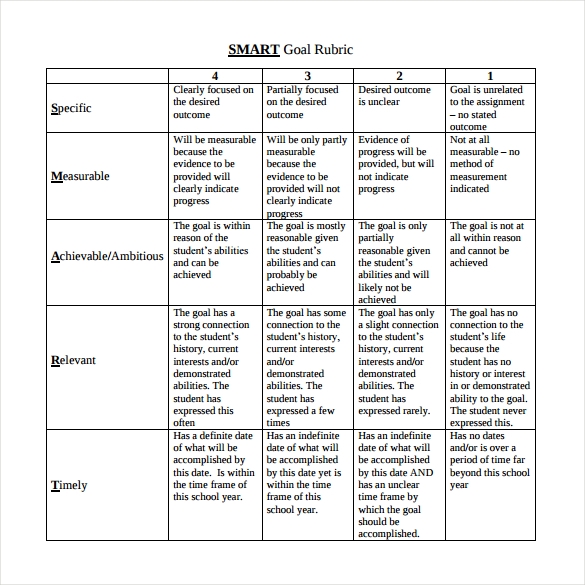
Assessment: | Students will create a SMART goal using the template to enhance their ability to assess and make better choices about tobacco, alcohol and drug use decisions and identify steps to achieve that goal.
Peer Collaboration
Planned Discussion
|
|
| Lesson # 2:Consequences of choices. | ||||
| Description: |
SWBAT Analyze the impact of decisions on the personal health goal.
SWBAT Identify possible barriers to achieving personal health goals. SWBAT identify the importance of education. SWBAT identify The steps in a decision making model. SWBAT demonstrate effective refusal skills. SWBAT demonstrate effective negotiating skills.
SWBAT demonstrate effective persuasion and advocacy skills.
|
Teacher Resources: | http://www.eduplace.com/graphicorganizer/pdf/timeline.pdf
|
|
| Student Resources: | http://www.softschools.com/teacher_resources/timeline_maker/
https://www.verywellfamily.com/steps-to-good-decision-making-skills-for-teens-2609104
worksheet |
|||
| Skills: | ● Predict the potential effects of an individual’s substance abuse on others
● Analyze the relationship between using alcohol and other drugs as well as other health risks.. ● Describe the harmful effects of drinking ● Develop a personal plan to improve health by staying free of alcohol, tobacco, and other drugs. |
Assessment: | ● Students will begin constructing a choices/consequences timeline that represents both past and present choices and the positive and negative consequences associated with those choices.
● Check for understanding |
|
| Lesson # 3: Wellness. | ||||
| . | Description: | SWBAT identify the components of wellness (e.g. physical, social, and mental/emotional), so students can begin to evaluate their personal lifestyle decisions.
SWBAT create a wellness plan to improve their lifestyle.. |
Teacher Resources: | https://www.youtube.com/watch?v=83kCyy0k1tU
https://www.livestrong.com/article/42697-health-triangle/
|
| Student Resources: | Internet for research. | |||
| Skills: | ● Maintain balanced nutrition and physical activity based on knowledge of short and long term benefits and consequences | Assessment: | ● Students may compare and contrast their level of wellness to that of a role model
● Students may create a brochure about health and wellness |
|
| Lesson # 4: Mindfulness. | ||||
| 4. | Description: | ● SWBAT understand the importance of Mindfulness.
●SWBAT Implement the plan to achieve the personal health goal and overcome possible barriers. |
Teacher Resources: | CDC.gov
|
| Student Resources: | https://www.pixton.com
|
|||
| Skills: | ● The benefits of mindfulness practices
● Goal Setting in relation to mindfulness |
Assessment: | Formative assessment- While the students are collaborating with their peers, the teacher will walk around with a clipboard and list of students names checking for positive praise during the activity
Exit Ticket. |
|
| Lesson # 5: Hygiene. | ||||
| 5. | Description: | SWBAT understand the importance of personal hygiene so students can continue to develop positive physical and social well-being.
SWBAT to respectfully communicate with classmates. |
Teacher Resources: | http://rubistar.4teachers.org/index.php?screen=NewRubric
https://www.youtube.com/watch?v=jQ2e0KH5WrI
|
| Student Resources: | https://www.pixton.com
|
|||
| Skills: | ● The benefits of good hygiene practices
● Goal Setting for practicing good personal hygiene |
Assessment: | ● Students will work in a group to create a media presentation (ex. music video, dance, comic strip) to illustrate/demonstrate the benefits of good hygiene practices. | |
| Lesson # 6: Community Resources | ||||
| 6. | Description: |
SWBAT Identifies personal support systems and explains their importance in achieving the personal health goal.
SWBAT to create a commercial for a valuable resource in their community. |
Teacher Resources: | https://www.albanycountyda.com/Bureaus/RevJohnUMillerOR/LinksResources.aspx
|
| Student Resources: | https://ctb.ku.edu/en/table-of-contents/assessment/assessing-community-needs-and-resources/develop-a-plan/main
|
|||
| Skills: | ● Develop a personal plan to live a healthy lifestyle.
● Demonstrate the ability to monitor personal behavior choices. ● Identify available sources in community. |
Assessment: | ● Presentation
● Quiz |
|
Mindfulness
Grade Level: 4th GradeSubject: Utilizing Mindfulness in Goal Setting |
Date: 11/28/2019Prepared By: Dylan Lappe |
Overview & Purpose: (What will be learned and why it is useful.)
The purpose of this lesson is to introduce the components of mindfulness. The concept of mindfulness correlates to mental health, as practicing mindfulness aides your mental health status. Mindfulness is useful to anyone because its proven to reduce stress, anxiety, depression, dealing with decision making efficiently, increases mortality, as teaches us the skill of how to live in the ‘now.’ It is essential for students to be able to explain, analyze, and apply concepts and key terms in order to gain knowledge about this topic.
Education Standards Addressed: (Include National, State and Common Core Standards)
National Standards
Standard 1: Students will comprehend concepts related to health promotion and disease prevention to enhance health
Standard 6: Students will demonstrate the ability to use goal-setting skills to enhance health.
Standard 7: Students will demonstrate the ability to practice health-enhancing behaviors and avoid or reduce health risks.
New York State
Standard 1: Personal Health and Fitness-Students will have the necessary knowledge and skills to establish and maintain physical fitness, participate in physical activity, and maintain personal health.
Standard 3: Resource Management-Students will understand and be able to manage their personal and community resources.
Common Core:
English Language Arts: Writing Standards:Text Types and Purposes
CCSS.ELA-LITERACY.W.11-12.2.A: Introduce a topic; organize complex ideas, concepts, and information so that each new element builds on that which precedes it to create a unified whole; include formatting (e.g., headings), graphics (e.g., figures, tables), and multimedia when useful to aiding comprehension.
English Language Arts: Comprehension and Collaboration
CCSS.ELA-LITERACY.W.6-12.1: Prepare for and participate effectively in a range of conversations and collaborations with diverse partners, building on others’ ideas and expressing their own clearly and persuasively.
Vocabulary/Concepts/Academic Language: (List all concepts that will be taught and assessed in the lesson.)
Vocabulary- Stress, Anxiety, Depression, Mortality, Relaxing, Breathing, breaths, present time
Concepts-Mindfulness, reducing stress, knowing when something is too stressful
| Educator Guide | ||||
| Guiding/Essential Questions:
Open-ended questions that provide focus for the curriculum and are aligned based on a key concept enduring understanding, and/or big idea (concept) to prompt inquiry. List all questions that will be presented to students during the lesson. |
How can I enhance my health status?
How can Mindfulness be beneficial to me? Who can support me? What resources are there to assist me? How can I develop the confidence to use the knowledge and skills I need to be safe and healthy? How can I resist unhealthy pressures? Why are health and safety skills and knowledge important to me? |
|||
| Objectives
(Specify skills/information that will be learned. No less than three objectives have been included. No less than two objectives are original and not subskills. Must include at least oneaffective objective. |
1.Students will analyze and identify three different ways mindfulness will benefit them while practicing healthy habits with 80% accuracy. (NHES 7,NYS 1.)
2.Students will demonstrate the ability to use goal-setting skills to enhance health. (NHES 6,NYS 1).
3.Students will identify at least three different ways they can change their mental health according to the power point lecture with 100% accuracy. (NHES 1, NYS 1) |
|||
| Information
(Give and/or demonstrate necessary information. This will include the functional knowledge taught.) |
Subskills: PG.E.4 Identifies possible barriers to achieving the personal health goal
Functional Knowledge:Mental Health 1A. Id. Individuals can take action (individually or with support) to positively impact their own mental health. |
|||
| Assessment
Plans for informal and/or formal, formative and/or summative. |
-Formative assessment- While the students are collaborating with their peers, the teacher will walk around with a clipboard and list of students names checking for positive praise during the activity
|
|||
| Materials Needed
(List all materials needed to complete the entire lesson plan) |
Laptop with projector hook up, projector, projector screen, Clipboard. | |||
| Room set up:
(Describe how the room will be arranged for this lesson and preliminary needs or attention prior to learners arriving or beginning the lesson.) |
The room has a total of seven tables in the classroom. At each side of the classroom, they’re three tables lined up with six chairs at each table. In front of the classroom is an additional table set up for the teacher. The tables have enough space between them so that the teacher can walk around each group without it being too crowded. | |||
| Resources: (What authentic community resources and reliable / valid internet websites will be used to support this lesson and communicate to others beyond the classroom.) | CDC.gov
http://www.Smilingmind.com.au
|
|||
| Special Considerations:
Whole class & small group considerations. |
Whole Class: The class will take notes in their notebook as the lecture begins. As the lesson progresses, it is important for the teacher to make sure that he/she is paying attention to the whole class behavior. The teacher needs to ask open ended questions, and it is a good idea to provide activities within the lesson to keep the class on task.
Small Group: When working together in small groups, the students are encouraged to provide thoughtful feedback with their peers as they work on a task. Interacting and sharing ideas with each other is the goal of the activities. This teaching method is called peer learning. |
|||
| Procedure: (Number each step. Use detail.)
Anticipatory Set: 5 Minutes 1) Stress management/mindfulness group discussion
Body of the Lesson: 20 minutes
1) Power point lesson
Closure: 5 minutes 1) Reflect on lesson 1) Summative Short answer assessment |
What the educator will do:
1) Before the lesson begins, the teacher will ask the students if they ever heard of the strategy called ‘mindfulness’ and how it is associated with goal setting?
Body of the lesson:
1) The teacher will have the google slides power point on ‘Mindfulness’ displayed on the screen. During the lecture, the teacher will pause during specific points during the lecture and ask key questions that he/she finds important. The teacher will call on students by name if the teacher doesn’t think they’re actively engaging in the lecture. The teacher will relate back to personal experiences, and talk about how different mindfulness techniques work.
2) The teacher will provide mindfulness activities during stoppage to encourage participation.
(The teacher will turn off the lights, telling the students to practice the mindfulness technique via http://www.Smilingmind.com.au. Once the mindfulness activity is over, the teacher will tell the students to work with a partner to identify how mindfulness is important for goal setting and achieving goals)
Closure: 1)The teacher will ask the students what they liked or disliked about the lesson. The teacher will also have an open discussion on what worked,and what mindfulness strategies worked or didn’t work for them. 2) The teacher will hand out a short answer exit slip that reflects on the components of the lesson. This assessment checks for understanding about the lesson the students just had.
|
What the learners will do:
1) The students will participate in the class discussion on how mindfulness is important to goal setting before the lecture on mindfulness begins.
Body of the lesson:
1) The students will be facing the teacher during lecture. The students will have their notebooks out writing down important notes and facts about mindfulness as the lesson goes on. Students are expected to participate in group discussion, and answer questions appropriately when called upon.
2) The students will collaborate with their peers throughout the group activities to reach their goal. Unexpectedly, the students will be told to practice mindfulness
(when the teacher turns off the lights. The students will practice mindfulness for one minute. After one minute is up, the students will work on goal setting activity)
Closure: 1) The students will participate in the discussion led by the teacher. The students will give personal feedback on today’s lesson. 2) The students will take the exit slip and complete short answer questions to the best of their ability. When they’re done, the students will hand back the assessment to the teacher on their way out of class.
|
Learner Modifications/Extensions
1) Modifications: If there is a TA present in the classroom assigned to a student, the teacher will collaborate with the TA prior to the lesson to talk about strengths and weaknesses of the student with a learning disability
Body of the lesson:
1) Modifications: The teacher will adapt the lesson for any student with individual needs. If there is a TA in the classroom, the teacher will talk with the TA to assist students taking notes. The teacher can also give a copies of the powerpoint for notes with ‘fill in the blanks’. This way, the student can focus on the key terms and not have to worry about writing down all of the information presented on a powerpoint slide. The student with a learning disability should also be sitting at a location in the classroom where he/she is easily accessible for the teacher or TA to assist during the lesson.
Closure: 1) Low performance learners can have the opportunity to take the assessment home if they need more time. If the student has a learning or writing disability, the teacher will assist the students as need be. |
Assessment Used:
1) No bell ringer provided for this lesson.
Body of the lesson:
1) Formative Assessment: The teacher will observe the different groups working on their challenge. The teacher will place a check mark next to their name in the daily attendance document looking for positive praise when peers are collaborating ideas.
4)Closure: Summative Assessment
Closure: 1) Verbal feedback 2) Summative assessment. Test provided. |
|
Coordinated School Health (How could this LE be supported by, delivered within, incorporated through a Coordinated School Health Model?) |
Health Education-This lesson reflects the use of health education because it informs students on the importance of mindfulness. The students are being made aware of the benefits, resources, and different practices of mindfulness. This lesson is also informative by giving the proper instruction on how to maintain a healthy mental health status. Dealing with stress, depression, and anxiety are realities for an average high school student. Teaching how to manage these barriers is essential for students.
Health Services-In Albany Schools, there is a full time school nurse available for students and staff at all times. The school nurse is also informative on the general education on how to maintain a healthy lifestyle by the proper amount of exercise, proper hygiene, eating a well balanced daily diet, and the practice of meditation/mindfulness.
Nutrition Services-This unit is to educate students practicing mindfulness. Practicing mindfulness is proven to help the human body physically as well. Nutrition plays a large role in avoiding diseases such as obesity, cancer, and obtaining other diseases such as diabetes. Mindfulness is proven to increase immunity and mortality, which is the result of fighting off diseases and remaining healthy.
Healthy School Environment-Part of having a health school environment is having the students engaged in the community, students involved with clubs, sports, and other programs. Having these services available to our students helps keep the criminal record low, and academic scores higher. Practicing mindfulness helps stabilize the mental health of students and staff.
Family and Community Involvement-There are many ways family and residents can be actively involved within our community. At the elementary level, students might do project in class. After the students are done with the project, the teacher can invite their parents or other family members to see what they’re working on in class. At the secondary level, the students could be involved in a service learning project where they might do something for a family in need in the community. After students learn about mindfulness, students could participate in relaxing activities such as yoga, or meditation.
Counseling, psychological and Social Services-Support services are readily available to the students at any time. The school is readily involved to help students anyway they can if they’re being reported homeless, no food to eat, or a death in the family. Grievance counselors are available to any student or students who need it if a tragedy happened, such as a beloved student or teacher passing away. The technique of mindfulness can aide in someones grievance with particular situation going on in individuals lives.
Physical Education-The physical education program at the school has a mission to keep students engaged in physical activity after graduation. It is the responsibility of the physical education teacher promote healthy lifestyles, and to show students that physical activity can be enjoyable. Students will understand the resources that they can use outside in their community, and made aware of other services. |
| Reflection:
What were the outcomes of the lesson/student learning? |
After the lesson has been taught, the teacher will reflect how the lesson went. The teacher will review the open ended guided questions asked to the students during the lecture. The teacher will also reflect how the activities went with the students, and evaluate if they can be challenged more or less with proper extensions and modifications. |
Summative Assessment
Name_________________
Circle the correct answer.
- A priority is something that is:
A. of most importance
B. of least importance
C. of some importance
D. of no importance
2. Setting goals requires taking:
A. one step at a time
B. multiple steps at a time
C. a giant leap forward
3. The “S” in the S.M.A.R.T. goals method of setting goals stands for:
A. systematic
B. specific
C. simple
D. none of the above
4,The goal ” I want to make good grades” is a S.M.A.R.T. goal.
A. True
B. False
5. The following is an example of a S.M.A.R.T. goal:
A. I want to make three “B’s” and one” A” second semester in my core courses.
B. I want to pass the second semester.
C. I want to make all A’s.
D. none of the above
6. The following are the benefits of setting goals:
A.You take control of your life.
B.You focus on the important things.
C. You will be more self-confident and believe in yourself.
D. all of the above
7. Mindfulness can be beneficial to achieving goals?
A.True
B. False
8. Mindfulness can be used at anytime?
A. True
B. False
 COACH LAPPE